
Baking Soda vs Activated Carbon: Which to Buy
Two things you can add to a litter box, at two very different prices. This page is about which one to buy: what each costs, what it does to dust, and what neither one will fix.
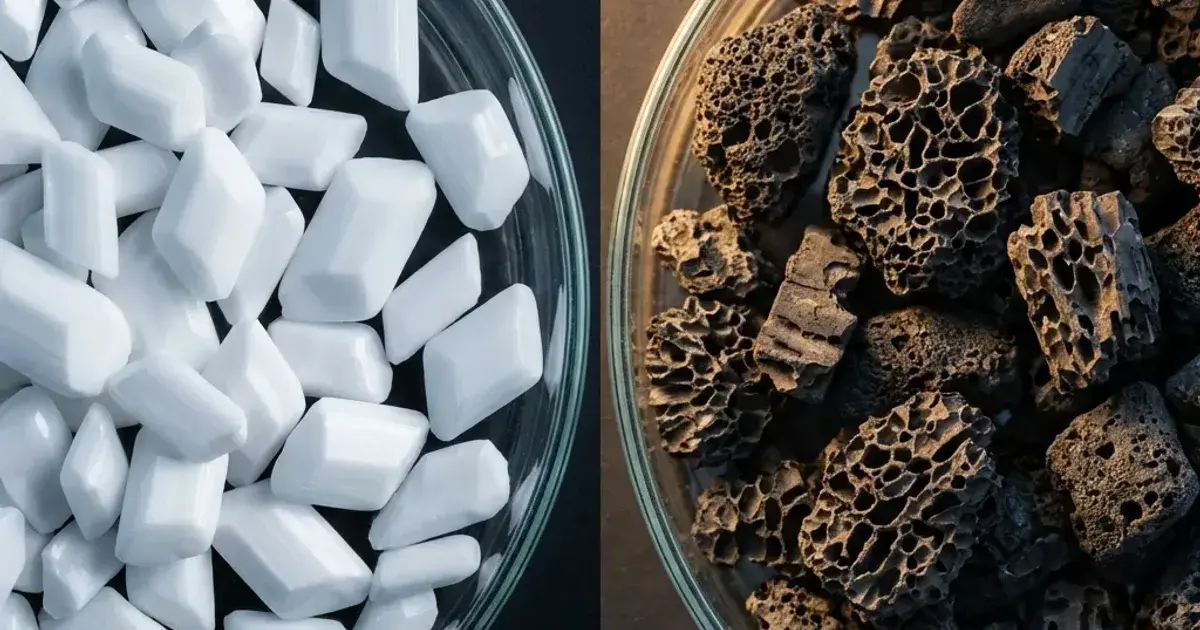

Quick answer
- 1Buy baking soda when price is the whole decision. It is the cheapest thing you can add to a box.
- 2Buy activated carbon when you want odor control with no perfume in it.
- 3Carbon goes after ammonia, the sharp smell most people pick up above about 5 parts per million.
- 4Too much baking soda leaves fine powder, so the box feels dustier.
- 5Neither one fixes weak clumps, a dirty box, or litter on the floor.
Baking soda vs activated carbon, side by side
| What matters | Baking soda | Activated carbon |
|---|---|---|
| Main job | Cheap odor neutralization layer | Fragrance-free adsorption of sharp urine odor |
| Best fit | Budget clay setups and store-bought odor boost | Homes that want less perfume and stronger ammonia focus |
| Cost profile | Lowest-cost entry point | Usually costs more, but can feel cleaner to live with |
| Dust risk | Can add powder if overused | Usually lower if the granules are dense and coarse |
| What it does not fix | Weak clumps, dirty boxes, heavy tracking | Weak clumps, dirty boxes, heavy tracking |
When baking soda wins: the better budget move
Baking soda makes the most sense when price and availability matter more than refinement. It shows up often in clay formulas aimed at budget-conscious shoppers who want better smell control without buying a premium litter.
It is best treated as a modest odor-control layer, not a miracle fix. If the base litter clumps badly, stays wet, or already tracks all over the room, baking soda will not rescue the whole setup.
The biggest drawback is that overdoing it can make the box feel dustier. That is part of the tradeoff with a fine powder ingredient.
When activated carbon wins: the cleaner smell-control move
Activated carbon is the better fit when you care most about sharp urine smell and want a fragrance-free result. That smell is mostly ammonia off the waste as it breaks down; the CDC ATSDR puts the point where most people can detect it at around 5 parts per million. This matters in small apartments, closed laundry rooms, and homes where heavily scented litter feels worse than the odor itself.
It also tends to be the better choice when you want to improve odor control while keeping your cat on the same base litter texture. In practice, that can be a more realistic upgrade path than switching litters entirely.
The tradeoff is cost. Activated carbon usually earns its keep on comfort and odor quality, not because it is the absolute cheapest option.
What neither option fixes
If clumps break apart, dirty litter stays behind and the box smells faster no matter which odor-control ingredient you choose.
No odor-control method replaces regular scooping and periodic full-box cleaning.
Tracking is driven more by litter texture, box design, and mat setup than by the odor-control ingredient itself.
Questions people ask
Which should I buy, baking soda or activated carbon?
Activated carbon is usually the better buy when you want a fragrance-free result, while baking soda is the cheaper and more available option.
Does baking soda make cat litter dustier?
It can. A light amount is usually manageable, but overusing baking soda can add fine powder and make a litter box feel dustier during pours and scooping.
Can activated carbon fix a bad litter by itself?
No. It can improve odor control, but it will not fix weak clumping, a dirty litter box, or a formula that tracks badly outside the box.
How to decide in 30 seconds
Choose baking soda if you want the lowest-cost odor-control option, buy mostly clay litter, and do not mind a more basic result. Choose activated carbon if you want odor control that feels less perfumed, more ammonia-focused, and easier to live with in a small indoor space.
Not sure you need either one? Work through the routine, litter or additive check first. Scooping and a clean box are free and they beat both of these. Still narrowing the field after that? Move to the tested three-way roundup or the side-by-side compare hub rather than picking by ingredient alone.
Purrify - for when the litter is right and the room still smells
Activated carbon that goes into the litter you already use, so smell gets its own fix instead of a different bag. In our own use it made the biggest difference to litter-box smell of anything we have tried.
Read our Purrify guide to picking a litter for odor control.
- Activated carbon, sold in bags
- 5.0 Google rating
- Stocked in 40+ pet stores across Canada
This comparison draws on the site's product reviews, category pages, and comparison framework.