The worry
Clumping clay works by swelling and sticking together when it gets wet. A kitten that eats a mouthful is eating something designed to do that. Paper and pellets do not swell the same way, so a mouthful is a mess rather than a worry.

Switch when the kitten stops putting litter in its mouth, not on a set birthday. Then mix the new litter in over about a week instead of swapping the box in one go. That is the whole answer. The rest of this page is how to tell, and what to buy.
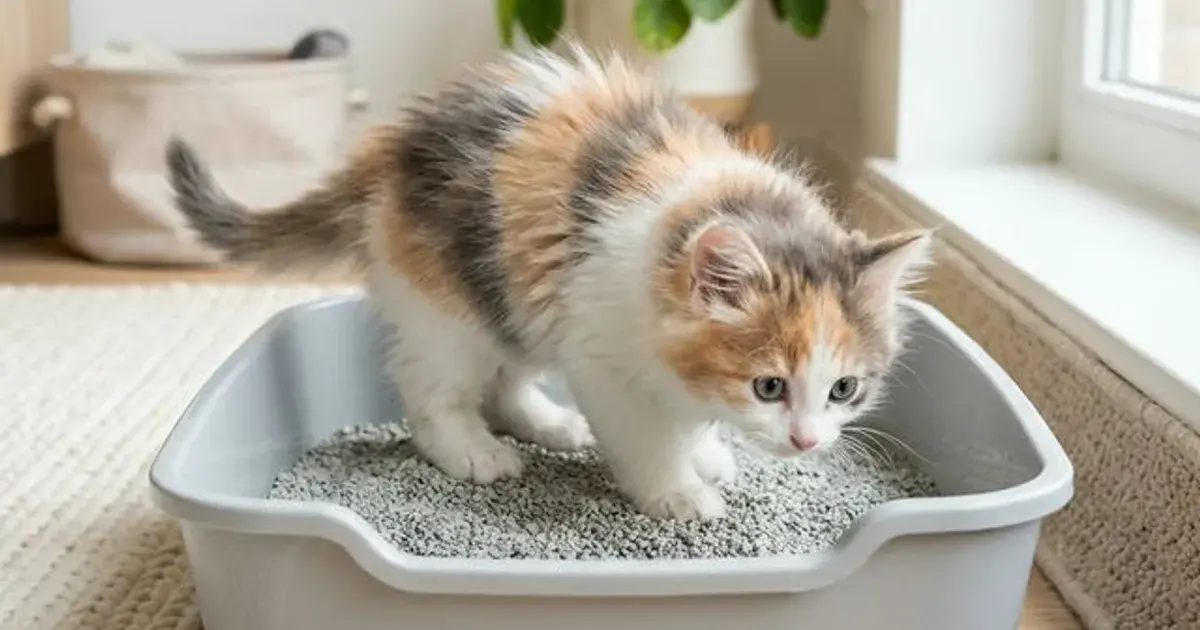

Clumping clay works by swelling and sticking together when it gets wet. A kitten that eats a mouthful is eating something designed to do that. Paper and pellets do not swell the same way, so a mouthful is a mess rather than a worry.
Less than the internet suggests. We have not found a published case series linking clumping litter to blockages in kittens, and the brands themselves put different ages on the bag. So this is a cheap precaution with thin proof behind it, which is a fine reason to take it and a bad reason to panic about it.
All four, not three. The last one is the one people skip, and it is the one that causes the accidents. A kitten that has just moved house has used up its tolerance for change.
Unscented, fine, and low on dust. ASPCA says most cats prefer clumping, unscented litter with a medium to fine texture, laid one to two inches deep rather than three to four. These are the unscented clumpers we have bought and weighed, least dust first.
| Litter | Made from | Dust per pour | Clumps that survived |
|---|---|---|---|
| Dr. Elsey's Ultra | Clumping Clay | 0.03mg | 98% |
| Dr. Elsey's Cat Attract | Clumping Clay | 0.04mg | 98% |
| Boxiecat Premium | Premium Clumping Clay | 0.04mg | 94% |
| Tuft + Paw | Soy / Tofu | 0.05mg | 78% |
| Naturally Fresh Walnut | Walnut Shell | 0.13mg | 89% |
| World's Best Cat Litter | Corn Litter | 0.15mg | 76% |
| Catalyst Soft Wood | Soft Wood / Pine | 0.15mg | 73% |
| Frisco by Chewy | Budget Clumping Clay | 0.58mg | 58% |
Scented litter is the other thing to avoid here. A kitten forming its lifelong idea of what a toilet smells like does not need perfume in the mix.
Go by behaviour, not a birthday. The worry with clumping litter is a kitten swallowing it while it explores, so the moment to switch is when the kitten stops mouthing the litter and simply digs and covers. Brands and vets give different ages for this, and we have not found a study that fixes one, so watch the kitten instead.
Because a young kitten tastes things. Non-clumping paper or pellets pass through rather than swelling, so a mouthful is a mess instead of a worry. It is a precaution, not a proven rule, and it costs nothing to take.
Mix, do not swap. Cornell advises adding small amounts of the new litter to the old rather than changing in one go. Start with a thin layer of the new litter under the old and build it up over about a week.
Put the old litter back the same day and start again more slowly. If the kitten is still avoiding the box on the old litter, that is a vet call, not a litter problem.
The starter tray that suited a hand-sized kitten is too small by the time the litter changes. A grown cat wants a box it can turn round in and dig at the back of. Buy the adult box at the same time as the adult litter and change one of them a week apart, so if something goes wrong you know which one caused it.
Depth changes too. Kitten trays get filled shallow; the temptation with a big box is to fill it deep. Do not. One to two inches is what cats actually use, and anything more is money sitting in a box waiting to be thrown out.
Activated carbon you add to the litter you already buy. We have used it in our own homes for years, and with dozens of friends and family. You can keep your existing base litter.
Read our Purrify guide to picking a litter for odor control.
Dust and clumping figures come from our own testing of bags we bought. Litter preference and depth are sourced to the ASPCA page linked above. Nothing here replaces your vet's advice about your kitten.