Try a different litter
VCA suggests trying different types of litter when a kitten ignores the box. Change one thing at a time so you know which change helped.

To litter train a kitten, give it one room, a box with low sides, and a visit to the box after every meal, drink and nap. Reward it when it goes and never punish a slip. Here are the steps, and what to change when the kitten ignores the box.
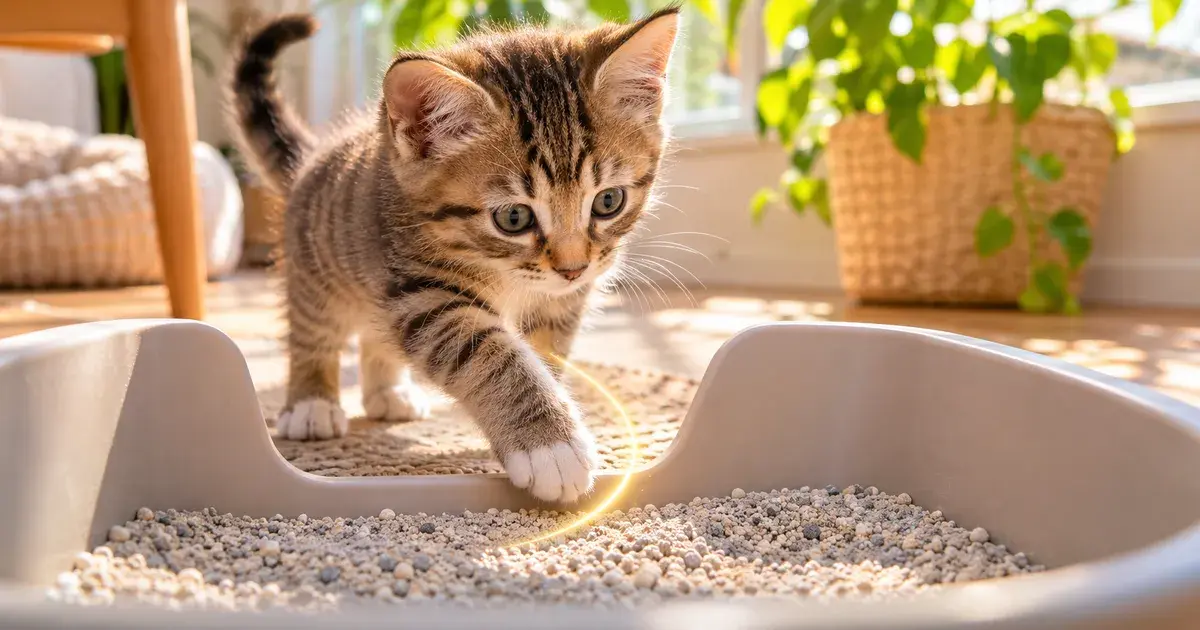

PetMD says you can start litter training at around four weeks, when kittens start weaning. A few things in the setup do most of the work.
On litter: ASPCApro recommends non-clumping litter for kittens under four months old. When to switch, and to what, is covered in the kitten to adult litter guide, so we leave it there. Sources disagree on how deep to fill the box. The ASPCA says one to two inches, PetMD two to three, and VCA at least three. There is no agreed figure, so watch what your kitten digs in comfortably.
VCA Animal Hospitals says young kittens learn good litter habits quickly if they are first confined to a room with a litter box, and should not roam unsupervised until they consistently use it. International Cat Care gives the reason: kittens often soil the house when given immediate access to large areas, and their bladder and bowel control are not as developed as an adult cat's. It suggests one room at first, then more time exploring other areas after a few weeks.
The same source says the kitten must have easy access to a clean litter tray at all times. That is why the box lives in the room, not down the hall.
PetMD suggests placing the kitten in the box each time it eats, drinks or wakes from a nap, until it starts using the box on its own. PDSA says to place kittens in or near the tray, and that it may take a few times to grasp the idea, so keep trying.
PetMD says ideally to scoop after every elimination during training, so the kitten does not develop an aversion to the box. International Cat Care adds a catch: cats learning to use the tray may need to establish it as a toilet site, and cleaning it too often may weaken that association. So the aim is a tidy box, not a freshly scrubbed one every hour. Our how to clean a litter box guide covers the routine for later.
When you do change litter, the RSPCA suggests adding a little of the old litter to the fresh, because the familiar scent encourages a kitten to use the tray until it is fully trained. The ASPCA also notes that cats usually develop a litter preference as kittens, which is one more reason to avoid chopping and changing.
VCA Animal Hospitals is blunt: do not punish a kitten or cat for a mistake, never shout at or strike it, and do not rub its nose in the puddle. Punishing a natural act can make a cat secretive or fearful about going. PDSA adds that the kitten will not understand why you are telling it off.
Clean the spot with an enzymatic product, per VCA. The ASPCA says not to use an ammonia-based cleanser. If mistakes keep happening in one place, VCA suggests putting a litter box near that area.
Work through these one at a time. They come from VCA Animal Hospitals unless noted.
VCA suggests trying different types of litter when a kitten ignores the box. Change one thing at a time so you know which change helped.
VCA lists removing box covers as a fix, and the ASPCA says most cats do not like lids on their boxes.
A box beside a noisy appliance or a food bowl is easy to skip. A quiet spot that is not a cornered one works better.
VCA calls it a buffet: set out several box styles and see which one your kitten gravitates to.
If the kitten used the box and then stopped after a litter change, our cat won't use the litter box after a switch guide is the better fit. For a kitten peeing or pooping outside the box over and over, start with our peeing outside the litter box guide.
We cannot give you a number of days, because none of the vet or welfare sources we checked does. PDSA says it may take a few tries, and PetMD says to be patient. The practical test is the one VCA uses: the kitten consistently uses the box. That is when it is ready for more of the house.
PetMD says medical causes for missing the box are rare in kittens, but should not be overlooked, and VCA says to talk to your vet to rule out underlying causes if the kitten keeps missing. PDSA goes further: if a kitten is straining to go, seems uncomfortable, or has not been toileting as normal, get advice from your vet immediately.
Keep the kitten in one room with a low-sided box, place it in the box after meals, drinks and naps, and praise it right after it goes. Never punish a mistake. Widen the kitten's range only once it uses the box reliably.
None of the vet and humane-society pages we checked give a number of days or weeks. PDSA says it may take a few tries to grasp the idea, and PetMD says to be patient. Judge progress by what your kitten does, not by a calendar.
PetMD says you can start at around four weeks, when kittens start weaning, by offering a kitten-friendly litter box.
Common fixes from VCA are a different litter, no lid on the box, or a new spot for it. Make sure the sides are low enough for the kitten to climb in, and put a box where the mistakes keep happening. If it keeps missing, see your vet.
Stay calm and clean it with an enzymatic product, not an ammonia-based cleaner. Do not scold the kitten or rub its nose in it. VCA warns that punishment can make a cat secretive or fearful about going.
ASPCApro recommends non-clumping litter for kittens under four months old. For the move to adult litter, see our kitten to adult litter guide.
PDSA says to get advice from your vet straight away if your kitten is straining to go, seems uncomfortable, or is not toileting as normal. VCA also says to speak to your vet to rule out other underlying causes if the kitten keeps missing the box.
If you are still picking a litter, our best cat litter for kittens page compares the options. Once the kitten is grown, the move to adult litter has its own plan in the kitten to adult litter guide.
Activated carbon you add to the litter you already buy. It holds smell on its surface instead of covering it with perfume. You can keep your existing base litter.
Read our Purrify guide to picking a litter for odor control.
We earn commissions from affiliate links.
Every step here is sourced to the vet and animal-welfare pages linked in the text: VCA, PetMD, PDSA, International Cat Care, the ASPCA, ASPCApro and the RSPCA. It is general information. Your own vet's advice about your kitten beats anything written here.