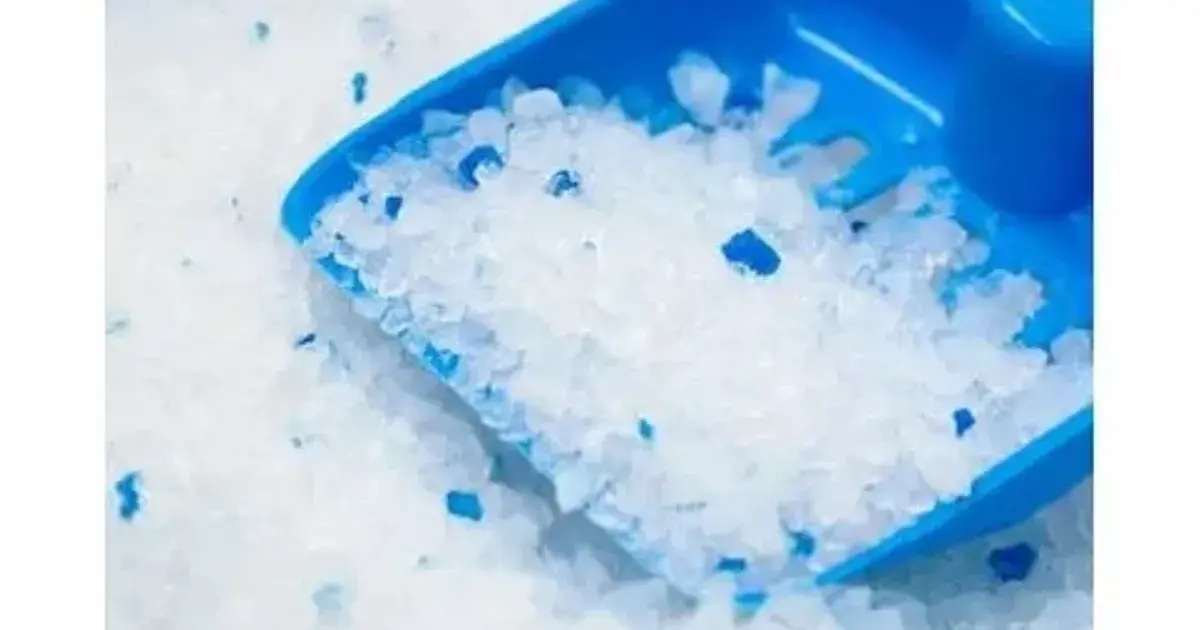
Crystal Litter

Silica Cat Litter Dust: What the Warning Means

Search for silica and you land on serious health warnings. Those warnings are about a different material from the beads in a crystal litter box. One is quartz dust off a building site. The other is silica gel, the sachet in a shoebox. Getting the two mixed up is the whole reason this question keeps coming up.

8 min readUpdated Aug 22, 2026

The silica in the safety warnings

  • Respirable crystalline silica. Quartz, essentially, ground small enough to breathe.
  • It is a workplace hazard. It comes off cutting, sawing, grinding, drilling and crushing stone, concrete, brick and mortar.
  • The regulators care about it because the particles are hard, sharp and inhaled all day on a building site.

The silica in a crystal litter box

  • Silica gel, the same stuff as the little sachets in a shoebox, made into beads you can see and pick up.
  • The maker of the crystal litter we tested says it is the amorphous form, which has no repeating crystal structure.
  • That is a claim by a brand about its own product. It is a reasonable place to start, and it is not the same as independent testing.

What the two sources actually say

OSHA covers respirable crystalline silica and nothing else: particles at least 100 times smaller than ordinary sand, released by cutting, sawing, grinding, drilling and crushing stone, concrete, brick and mortar. Its page does not discuss household products at all.

PrettyLitter, the brand behind the crystal litter in our catalog, states that it uses amorphous silica and that amorphous silica is not classified as a known human carcinogen, unlike respirable crystalline silica. Take that as the maker describing its own formula, because that is what it is.

What we measured, and what we did not

We weigh airborne particulate during a standard pour for every litter we buy. PrettyLitter has not been through that test yet, so its dust figure on this site reads not measured, and we will not put a number on it until it has.

If you want a low-dust litter backed by a reading rather than a category assumption today, Ökocat Paper Pellet is the lowest we have recorded at 0.00mg per pour.

Handling the beads sensibly

  • Pour the beads in gently rather than shaking the bag out. Any granular product throws fines when you agitate it.
  • Keep the bag away from your face while you tip. The cloud, if there is one, is at the mouth of the bag.
  • Do not crush or grind spilled beads to sweep them up. Pick them up whole or vacuum them.
  • Store the bag closed. Silica gel absorbs moisture from the room, which is the whole point of it, and a bag left open loses capacity before it reaches the box.
ReviewCatLitter editorial teamUpdated Aug 22, 2026

This page separates two materials that share a name. Where a figure is missing we say so rather than estimating, and the brand claim about amorphous silica is labelled as a brand claim.

Questions people ask

Is silica cat litter dangerous to breathe?
The warnings people find when they search for silica are about respirable crystalline silica, which OSHA describes as a workplace hazard from cutting and grinding stone and concrete. Crystal litter is sold as silica gel, an amorphous form, and the maker says so directly. Those are different materials.
How much dust does crystal litter make?
We have not weighed it. PrettyLitter is the crystal litter in our catalog and its dust figure reads not measured, so we make no dust claim about it anywhere on this site.
What happens if my cat eats a silica bead?
Ask a vet, not a review site. Silica gel beads are not food, they absorb moisture, and a cat that eats litter of any kind is worth a phone call to the practice.
Is crystal litter safe for kittens?
Beads are large enough to be mouthed by a curious kitten, which is the reason many households wait until a cat is older. It is a question for the vet who sees your kitten.