
Types of Cat Litter: Every Material Compared
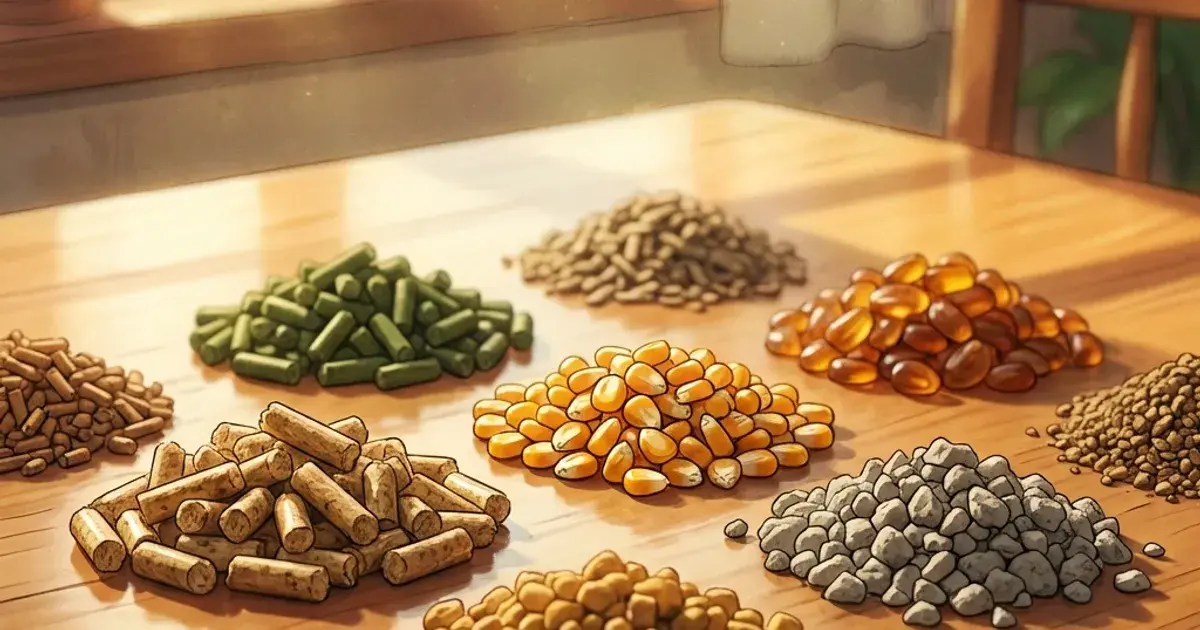
Cat litter is made from clay, silica crystals, pine, paper, corn, walnut shell, tofu, wheat and grass. This guide sorts them by how they behave in the box, with our readings for each material we have tested.

Quick answers
- 1The main types of cat litter are clay, silica crystal, and plant-based litters made from pine, paper, corn, walnut shell, tofu, wheat or grass. VCA Animal Hospitals splits them into traditional (clay and silica) and natural.
- 2Clay and several plant litters clump. Pine pellets, paper pellets and crystals do not.
- 3We have not tested a wheat or grass litter, so those two get no reading here.
Every material we tested, side by side
One bag stands in for each material. Read each row as that bag, not the whole category.
| Material | Tested bag | Dust per pour | Clumping |
|---|---|---|---|
| Clay | 0.03mg per pour | 98% of clumps survived | |
| Silica crystal | not measured | Non-clumping | |
| Pine pellet | 0.08mg per pour | Non-clumping | |
| Pine, soft wood | 0.15mg per pour | 73% of clumps survived | |
| Paper | 0.00mg per pour | Non-clumping | |
| Corn | 0.15mg per pour | 76% of clumps survived | |
| Walnut shell | 0.13mg per pour | 89% of clumps survived | |
| Tofu (soy) | 0.05mg per pour | 78% of clumps survived |
Wheat and grass are not in the table because we have not tested a bag of either.
Clay and silica: the traditional types
VCA Animal Hospitals says clay is a popular choice that is highly absorbent, while tending to be dustier and heavier, and that its dust can irritate cats and people with respiratory issues. It also says some cats ingest small amounts while grooming, which can lead to digestive blockages.
Silica crystals, VCA says, absorb moisture effectively and need less frequent changes, but can be harsh on sensitive paws. The crystal we tested, PrettyLitter, is non-clumping, and has a full explainer in our crystal litter guide. Clay is covered by is clay cat litter safe, our best clay cat litter ranking and our best clumping cat litter roundup.
Material type changes how a litter behaves, so see the non-clumping ranking and the automatic litter box ranking for your setup.
Pine and paper: the pellets
Both are pellets, and neither clumps in our tests. Ökocat Paper Pellet read 0.00mg per pour, the lowest dust we recorded, and Feline Pine read 0.08mg per pour. Pine also comes as soft wood granules, Catalyst Soft Wood being the one we tested, which clumped softly: 73% of its clumps survived our drop test.
Full how-to for a pellet box is in the pine litter guide. Read the Ökocat Paper Pellet review for paper.
Corn, walnut and tofu
VCA Animal Hospitals says natural clumping litters made from corn or wheat are an option if you want low maintenance, though natural litters may not clump quite as tightly as clay. PetMD says plant-based litters such as corn, wheat or pine are typically gentler on sensitive paws and noses.
- Corn. World's Best Cat Litter held 76% of its clumps in our drop test and read 0.15mg per pour.
- Walnut shell. Naturally Fresh Walnut held 89% and read 0.13mg per pour.
- Tofu (soy). Tuft + Paw held 78% of its clumps and read 0.05mg per pour.
The best natural cat litter roundup ranks the plant-based bags against each other.
Wheat and grass: untested
Wheat and grass litters are on the shelf, and people search for them. We have not tested a bag of either, so there is no reading and no ranking here. The one outside statement we can pass on is VCA's, that corn or wheat natural clumping litters are an option for low maintenance. If we test one, it goes in the table above.
Picking a type
Start with the question that matters most for your home. Scooping or full changes: see clumping vs non-clumping. Dust in the house: the low-dust roundup. A cat that refuses the new texture: switch gradually, as in how to switch cat litter.
Questions people ask
What are the main types of cat litter?
VCA groups them as traditional litters, usually clay or silica crystals, and natural litters made from pine, corn, recycled paper and similar plants. Wheat, walnut shell, tofu and grass are other plant-based types. Each comes clumping or non-clumping, except crystals and pellets, which in our tests do not clump.
What is the best type of cat litter?
There is no single best material. It depends on your cat, your tolerance for dust, whether you want to scoop or change the whole box, and whether your cat accepts the texture. Our table shows what each material did in our readings, and the roundups rank bags within a material.
Which type of cat litter is lowest in dust?
Among the bags we tested, Ökocat Paper Pellet read 0.00mg per pour, Tuft + Paw read 0.05mg per pour, and Dr. Elsey's Ultra read 0.03mg per pour. Those are individual bags, not whole materials. VCA says clay litter in general produces dust that can irritate cats and people with respiratory issues.
Which types of litter clump?
Clay, corn, walnut and some other plant litters clump. Pine pellets, paper pellets and crystals did not clump in our tests. VCA says natural litters may not clump quite as tightly as clay.
Have you tested wheat or grass litter?
No. We have not tested a wheat or a grass litter, so we give no reading for either and do not rank one.
What is gentlest on a cat's paws?
VCA says natural litters made from pine, corn or recycled paper are gentle on paws, and that silica crystals can be harsh on sensitive paws. PetMD says plant-based litters made from corn, wheat or pine are typically gentler on sensitive paws and noses. Cats differ, so watch what yours does.
Go deeper on one material
- Scoop or change the whole box? Clumping vs non-clumping cat litter.
- Plant-based bags ranked: best natural cat litter.
- Pellets: pine cat litter. Crystals: crystal cat litter.
- Pellets against a scoopable litter: pellet cat litter vs clumping.
- Perfume or none: scented vs unscented cat litter.
- More than one cat: multi-cat litter vs regular.
Every reading in the table comes from our own catalog, each tied to one bag. The general descriptions of clay, silica and natural litters come from the VCA and PetMD pages linked where they are used. A bag is not its whole material, so treat each row as one example.