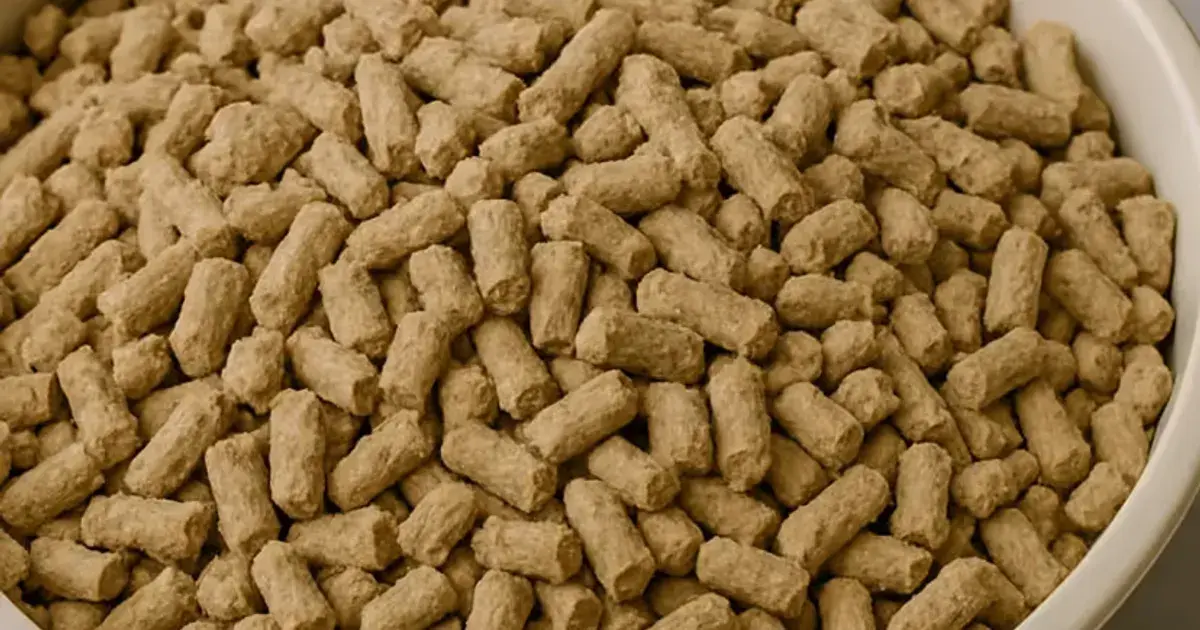
Pellets or soft wood: what our readings show
Both litters below are made from pine, and they are not the same product. Each row is one bag. It says nothing about every pine litter on the shelf.
The two pine litters compared| Feline Pine | Pine Pellet | 0.08mg per pour | Non-clumping, so no drop test |
|---|
| Catalyst Soft Wood | Soft Wood / Pine | 0.15mg per pour | 73% of clumps survived our drop test |
|---|
Our review verdicts line up with the form. Feline Pine is best for pellet users and sifting boxes. Catalyst Soft Wood is best for cats that reject pellets. VCA Animal Hospitals makes the same trade in general terms: natural litters from pine, corn or recycled paper can be low maintenance, but they may not clump quite as tightly as clay.
How to use pine pellets
Pellets work differently from clay.
- Fill with pellets, not sawdust. Whole pellets soak up urine, then break down into sawdust. That is how the litter is meant to work.
- Scoop solids every day. Our Feline Pine review found solid waste sits on top of the pellets until you take it out.
- Stir the box. Our review says to stir the pellets so the sawdust spreads out.
- Remove the sawdust. With a sifting box you empty the lower tray. Without one, plan on a full change about once a week for one cat.
- Put the old litter beside it. If your cat balks, you have not lost the box.
Sawdust and the sifting box
A sifting litter box for pine pellets is two trays. The top one has slots. Sawdust falls through into the bottom tray, and whole pellets stay on top to keep working. Our Feline Pine review calls a sifting box essential, because without one you dump pellets that were still good along with the sawdust.
We have not tested sifting boxes, so we do not name one.
The sawdust also travels. Our review found large pellets do not track much but the fine sawdust does, so a mat under the box helps. For more on that, read how to stop litter tracking. When it is time to throw the sawdust out, the disposal guide covers it, and Carmel Area Wastewater District is why we say not to flush litter.
Pros and cons of pine litter
What goes for it
- Low dust on both bags we read: Feline Pine at 0.08mg per pour and Catalyst Soft Wood at 0.15mg per pour.
- PetMD says plant-based litters, pine among them, are a biodegradable option typically gentler on sensitive paws and noses.
- RSPCA says it saw wood pellets perform best in its own trials. The page gives no method or figures.
- A soft wood granule exists for cats that dislike pellets.
What goes against it
- Pellets do not clump, and the sawdust needs managing.
- ASPCA says most cats prefer clumping, unscented litter.
- RSPCA adds that some cats may prefer a fine sandy litter.
- International Cat Care says cats can find hardwood-based pellets uncomfortable to stand on, particularly with arthritis. The source says hardwood, and pine is a softwood, so take it as a reason to watch your cat, not a verdict on pine.
Will your cat take to it?
Pellets feel nothing like sand. International Cat Care says cats tend to prefer fine-grain, unscented litter with the consistency of sand. Cornell Feline Health Center and ASPCA back the same point about scent. We have no source on whether the smell of pine bothers cats, so if yours hesitates, treat the scent as one possible reason.
The safe way to test is side by side. iCatCare suggests mixing the new litter in gradually over a week, or putting a second tray with the new litter beside the old one and letting your cat choose. If the pellets lose, the soft wood in our Catalyst Soft Wood review is the closest pine to a sand feel. If your cat refuses all of it and starts going elsewhere, read what to do when a cat will not use the box after a switch.
Is pine litter safe?
We looked for a named veterinary source on pine litter and did not find one that says it is safe, or one that says it is unsafe. So we do not say either. Nothing on this page is a safety claim, and the dust readings above are readings, not a verdict. If you have a question about your own cat, your vet is the person to ask.
Which one to pick
- Choose pellets if you will use a sifting box and your cat accepts the texture. Start with the Feline Pine review.
- Choose soft wood if your cat dislikes pellets or you want to scoop clumps. Start with the Catalyst Soft Wood review.
- Choose neither if you want a hard clump. Our clumping ranking is the place to look.
Questions people ask
Is pine cat litter safe for cats?
We found no veterinary source that says pine litter is safe, and none that says it is unsafe, so we make no claim either way. If you have a worry about your own cat, ask your vet.
Do you need a sifting litter box for pine pellets?
Pellets turn to sawdust when wet. A sifting box lets that sawdust fall through to a lower tray while whole pellets stay on top. Without one, sawdust builds up and you end up emptying the box about once a week, according to our review of Feline Pine.
Does pine litter clump?
It depends on the bag. Feline Pine is a non-clumping pellet. Catalyst Soft Wood is soft wood granules, and 73% of its clumps survived our drop test. VCA says natural litters made from pine may not clump quite as tightly as clay.
How do you get rid of the sawdust?
Use a sifting box so it falls through to a lower tray. Our review found the fine sawdust is the part that tracks, so a mat under the box helps.
Is pine litter dusty?
Not in our readings. Feline Pine measured 0.08mg per pour and Catalyst Soft Wood measured 0.15mg per pour. Those are two bags, not all pine litter.
What if my cat will not step on pellets?
Try a softer wood granule such as Catalyst Soft Wood, or go back to the old litter and mix the new one in gradually. iCatCare also notes that cats can find hardwood-based pellets uncomfortable to stand on, particularly cats with arthritis.