One cat can block the other
A cat sitting in a doorway is not doing nothing. It is holding a checkpoint. The spare box means there is always one the other cat can reach without a negotiation.

One box per cat, plus one spare, spread across the floors they use. One cat means two boxes. Two cats means three. The spare is not a luxury; it is the box that gets used on the day something goes wrong with the other one.
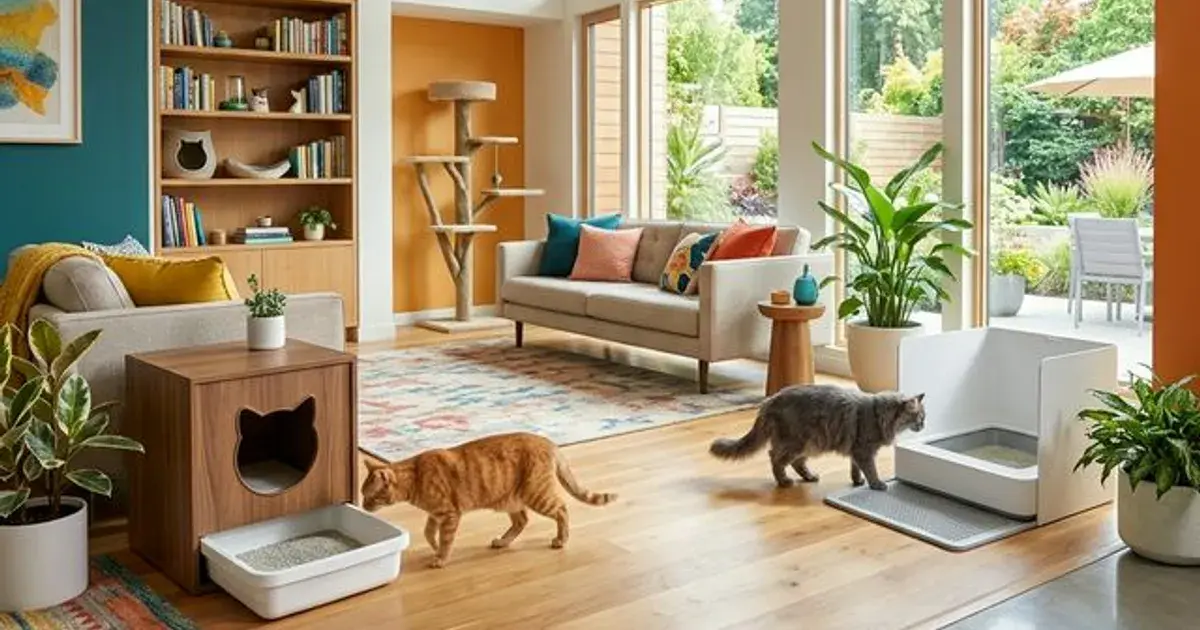

ASPCA says to keep one box for each cat in the household, plus one extra, and to scoop at least once a day. That is the whole rule. Everything below is what happens when people round it down.
| Cats | Boxes | How to place them |
|---|---|---|
| One cat | Two | Different rooms. Many cats use one for urine and one for stool without being taught. |
| Two cats | Three | Never all three in one corner. One should be reachable without crossing the other cat's favourite spot. |
| Three cats | Four | At least one per floor, and at least one with two exits so nobody can be cornered in it. |
| A cat with sore joints | Add one | On the floor where that cat sleeps, so it never has to take stairs to reach a box. |
That last row is not our idea. Cornell Feline Health Center says cats with painful arthritis may struggle to reach a box, especially if stairs are involved, and may start going elsewhere as a result.
A cat sitting in a doorway is not doing nothing. It is holding a checkpoint. The spare box means there is always one the other cat can reach without a negotiation.
It looks like fussiness. It is common enough that a single-cat home often needs two boxes, and that surprises people who have never owned a cat before.
Work runs late, you travel, someone forgets. With a spare, a missed scoop is untidy. With one box, a missed scoop is a puddle behind the sofa.
Not much, and this is the part people get wrong. Two cats produce the same waste whether they use two boxes or three, so the third box mostly holds litter that is waiting its turn. Here is how long a bag lasted us in a one-cat box against a multi-cat box, for the litters that hold up to sharing.
| Litter | Bag | Lasts, one cat | Lasts, multi-cat | Per day |
|---|---|---|---|---|
| Frisco by Chewy | 40 lbs | 4 weeks | 2.8 weeks | $0.30 |
| Arm & Hammer Super Scoop | 40 lbs | 4.5 weeks | 3 weeks | $0.35 |
| Arm & Hammer Clump & Seal | 38 lbs | 5 weeks | 3.5 weeks | $0.43 |
| Dr. Elsey's Ultra | 40 lbs | 7 weeks | 4.5 weeks | $0.43 |
| Dr. Elsey's Cat Attract | 40 lbs | 7 weeks | 4.5 weeks | $0.56 |
| Purina Tidy Cats | 35 lbs | 4 weeks | 2.8 weeks | $0.39 |
| Naturally Fresh Walnut | 26 lbs | 6 weeks | 4 weeks | $0.54 |
Want the yearly figure for your own household size? We worked it out here.
One box per cat, plus one spare. The ASPCA states it directly: one for each cat in your household, plus one extra. Two cats means three boxes, three cats means four.
The same rule gives one cat two boxes, and it is worth doing. Plenty of cats will not use the same box for both jobs, and a second box costs less than one cleaned rug.
Yes, or the spare is not a spare. Two boxes side by side read as one big box to a cat that is being guarded away from that corner. Spread them out, and put one on each floor the cats use.
Less than you would guess. The cats produce the same amount either way, so the extra cost is the litter sitting unused in the spare box, not double the bags. What does go up is the number of boxes you have to scoop.
Four boxes is four scoops a day, not one. That is the number that decides whether people keep the setup, and it is why the fourth box quietly gets skipped in week three. If that sounds like you, put the boxes where you already walk: bathroom, landing, utility. A box in the spare room you never enter is a box you will never scoop.
More cats put more demand on the litter routine. If odor remains a problem after scooping and cleaning, Purrify is activated carbon you can add while keeping the familiar base litter in each box.
Read our Purrify guide to keeping the smell down with more than one cat.
Bag life and cost per day come from our own logged testing. The box count and the note on arthritic cats are sourced to the ASPCA and Cornell pages linked above.