
Why Is My Cat Laying in the Litter Box?
A cat that lies, sits or sleeps in the litter box is telling you something changed. Check the vet signs first, because some of them are an emergency. Then look at stress, the move, and the box itself.
Vet today if you see any of these
- Straining in the box, with little or no urine coming out.
- Many trips to the box, crying out, or growing distress.
- Blood in the urine.
Cornell Feline Health Center says a urethral obstruction is "an absolute emergency", and that an obstructed cat passes little or no urine and becomes increasingly distressed. The time from complete blockage to death may be less than 24 to 48 hours. VCA Animal Hospitals lists straining in the litter box among the signs that need immediate care. Phone a vet on the way. Do not try to treat it at home.

Quick answers
- 1Why is my cat laying in the litter box? We found no vet page that names a normal reason, so treat a sudden change as a reason to call your vet, not a quirk.
- 2Straining, little urine, blood or crying out is an emergency.
- 3If the vet finds nothing, look at stress, a recent move or new pet, and whether the box is big enough and in a quiet spot.
Why a vet comes first
VCA says cats have evolved to hide signs of illness and pain, and that sick cats usually become withdrawn and may hide, though it depends on the cat. They also tend to have lower energy and may sleep more. So a cat that suddenly changes its habits can be a cat that is not feeling well.
The litter box is the place where urinary trouble shows. Cornell's list of signs of lower urinary tract disease includes difficult or painful urination, going more often, crying out while urinating, blood in the urine, peeing outside the box and frequent licking of the genital area. VCA adds that less urine in the box can point to a kidney or bladder problem.
What to watch and tell the vet: how long your cat stays in the box, whether anything comes out, how the urine looks, and whether it is eating and drinking. Write it down. VCA says to make a vet appointment as soon as possible if your cat does not seem right.
Stress and a change at home
PDSA lists hiding or staying out of the way all the time as a sign of stress, and peeing in the wrong place as another. Its causes include moving house and a new pet in the home. The ASPCA says the same events, moving and adding new animals or family members, can lead to litter box problems.
PDSA also warns that many stress signs can be caused by medical problems, and that you should call your vet first after a sudden change in behaviour. That is why the vet comes before the home fixes.
If the vet clears your cat, our suggestion is to give it a second spot to retreat to, away from the box, and watch whether the box habit fades. The nervous cat guide and the moving house guide cover the setup.
The box itself
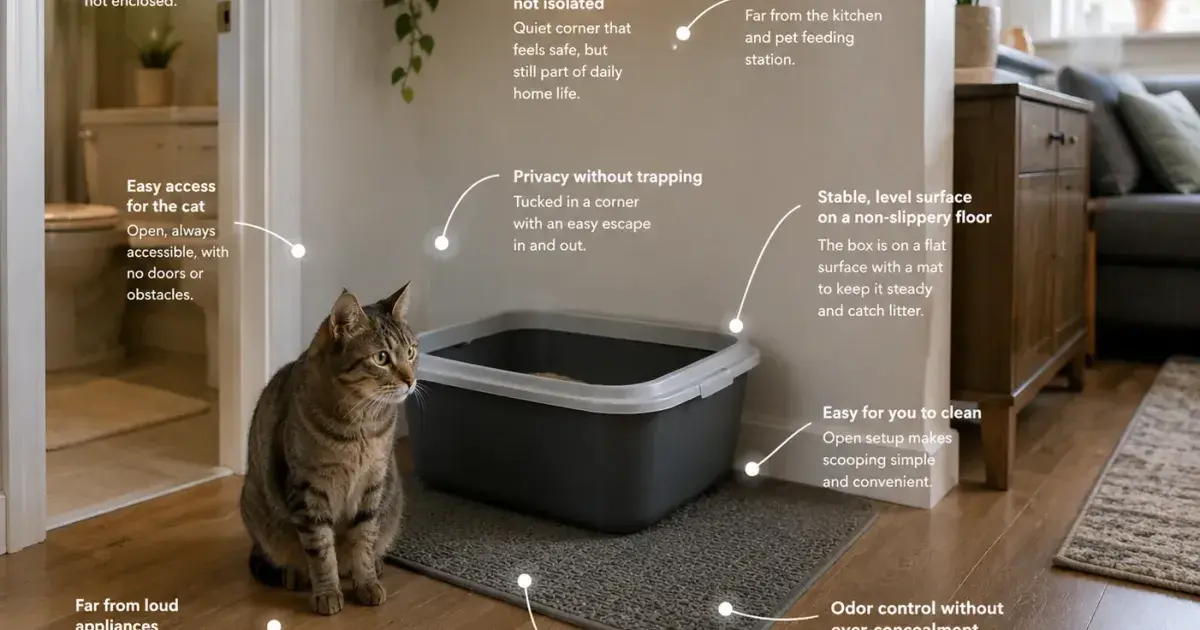
The ASPCA says the majority of cats prefer large boxes that they can enter easily, and that cats like the box in a quiet but not cornered location. International Cat Care says a tray should be big enough for the cat to turn around, about 1.5 times the cat's length.
None of these pages say a cat lies in a box because of its size. We pass them on because a box that is too small or in a busy spot is a common, fixable problem on its own, and worth ruling out. In a home with several cats, the count matters too: see how many litter boxes per cat.
What we could not confirm
Many cat sites list comfort, warmth, a familiar smell, a kitten nap or a pregnant cat nesting as reasons. We found none of them stated on a vet or animal-welfare page we could open, so they are not on this list. If your cat is otherwise bright, eating and using the box normally, a vet visit will usually settle it quickly.
Questions people ask
Why is my cat laying in the litter box?
We found no vet page that explains why cats pick the box as a resting spot. What the vet pages do say: illness and stress both show up as hiding and as changes around the litter box, so a cat that suddenly starts lying in it should be checked by a vet, especially if it strains or passes little urine.
Is it normal for a cat to sleep in the litter box?
We found no source calling it normal or harmless. PDSA lists hiding all the time as a sign of stress, and VCA says sick cats usually become withdrawn and may hide. If it is new for your cat, ask your vet.
My cat is sitting in the litter box and straining. What do I do?
Call a vet now. Cornell says a urethral obstruction is an absolute emergency, and VCA lists straining in the litter box among the signs that need immediate care. This matters most for male cats. Do not wait to see if it passes.
Can stress make a cat stay in the litter box?
PDSA lists hiding or staying out of the way all the time as a sign of stress, and moving house and a new pet as causes. The ASPCA says moving or new animals in the home can cause litter box problems. Neither page mentions lying in the box itself.
Could the box be too small?
The ASPCA says the majority of cats prefer large boxes that they can enter easily, and International Cat Care says a tray should be big enough for the cat to turn around, about 1.5 times the cat's length. Neither page links box size to lying in it, but a cramped box is worth fixing anyway.
When should I take my cat to the vet?
Straining or little urine: now, as an emergency. For anything else new, such as hiding, withdrawing, sleeping more or blood in the urine, VCA says to err on the side of caution and book an exam as soon as possible if your cat does not seem right.
If the vet gives the all-clear
- Easily spooked cat? Litter box placement for a nervous cat.
- New home? Moving house: what to do with the litter box.
- Peeing beside the box too? Why is my cat peeing outside the litter box.
- Enough boxes? How many litter boxes per cat.
The urgent signs rest on Cornell Feline Health Center and VCA. The stress and hiding lines rest on PDSA, the ASPCA and VCA. We found no veterinary page on why cats choose the box as a bed, so this guide does not claim one. It is general information, not a diagnosis. Your vet's advice beats anything here.